Easy Miso Soup Recipe – Delicious & Quick
Miso soup recipe is more than just a warm bowl of broth; it’s a gateway to comforting culinary traditions and a testament to the subtle power of fermentation. For many of us, the gentle, savory aroma of miso soup conjures images of cozy evenings, quick and nourishing meals, or perhaps a perfectly balanced starter to a delightful Japanese feast. What makes this seemingly simple dish so universally loved? It’s that incredibly satisfying umami depth, the subtle interplay of salty and sweet, and the versatility that allows it to be both a light palate cleanser and a substantial, hearty meal with the addition of tofu, seaweed, and other delicious ingredients. Learning to make authentic miso soup at home is surprisingly easy and incredibly rewarding, offering a taste of Japan right in your own kitchen.
Why You’ll Love This Miso Soup Recipe
The Ultimate Comfort Food
Miso Soup Recipe
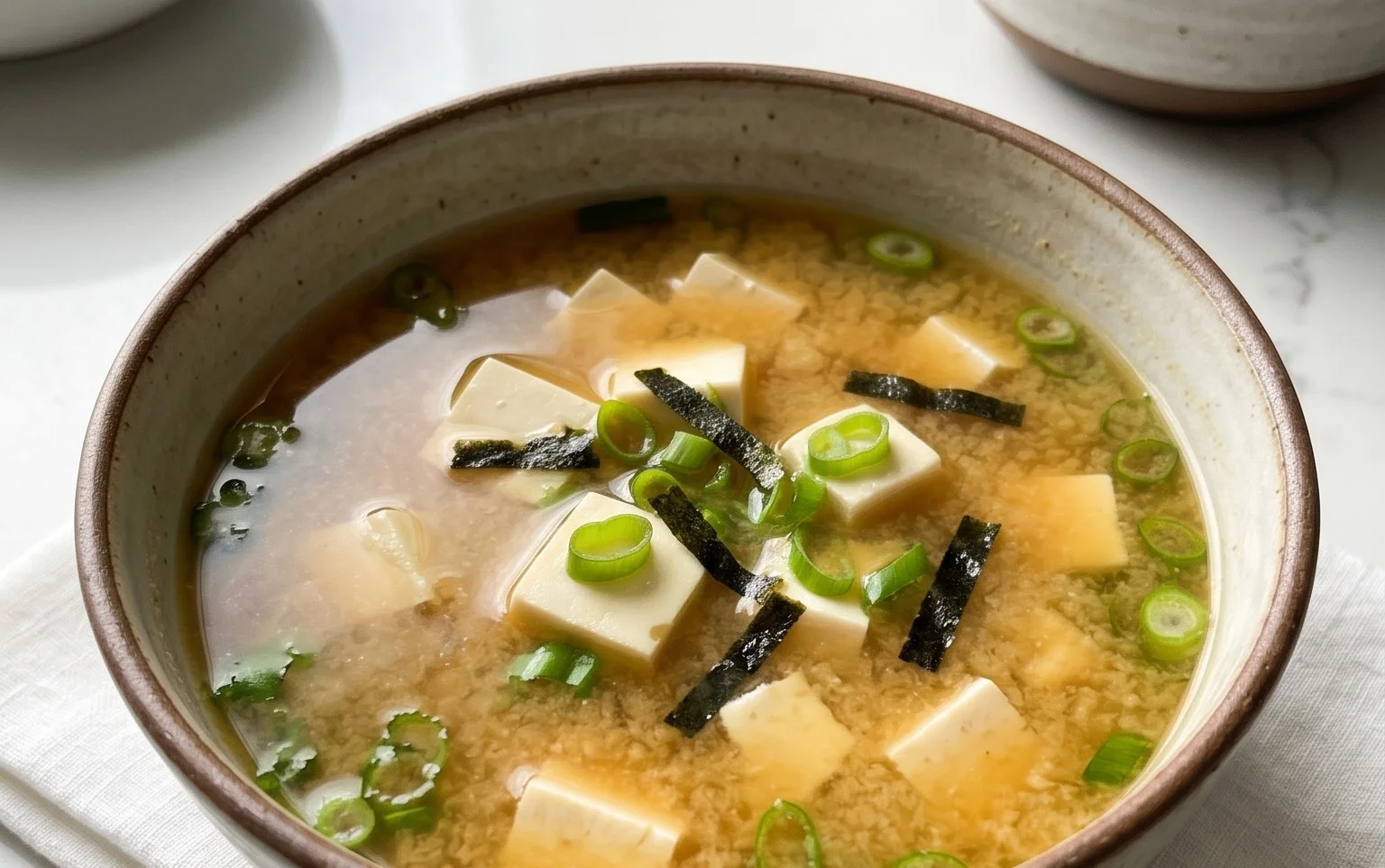
There’s something incredibly comforting and deeply satisfying about a steaming bowl of miso soup. It’s a staple in Japanese cuisine for a reason – it’s nourishing, quick to prepare, and wonderfully flavorful. Whether you’re enjoying it as a light appetizer before a meal, or as a simple yet wholesome lunch, this classic recipe is sure to become a favorite in your kitchen. The beauty of miso soup lies in its simplicity, allowing the rich, umami-packed flavor of miso paste to shine. While there are many variations, this fundamental recipe provides a perfect foundation that you can easily customize.
Ingredients:
Cooking Instructions
Preparing this delightful miso soup is a straightforward process, and the result is a soul-warming dish that’s both healthy and incredibly delicious. Let’s get started!
Step 1: Rehydrate the Seaweed
The first thing we need to do is prepare our dried seaweed. Take the heaping tablespoon of dried seaweed and place it in a small bowl. Pour just enough warm water over it to cover the seaweed completely. You’ll notice it quickly expands and softens. This usually takes about 5 to 10 minutes. Once it’s rehydrated, drain any excess water thoroughly. Some people like to give it a gentle rinse as well, but this is optional. The rehydrated seaweed will add a lovely texture and a subtle oceanic flavor to our soup.
Step 2: Prepare the Dashi Base
Now, let’s work with our dashi. Dashi is the foundational broth for many Japanese soups and is known for its delicate, savory flavor. You can purchase dashi granules or packets from most Asian grocery stores, or even some larger supermarkets. If you’re using granules, simply follow the package instructions to prepare 2½ cups of dashi. If you’re feeling adventurous and want to make your own dashi from scratch using kombu (kelp) and katsuobushi (bonito flakes), that’s fantastic, but for this recipe, using a good quality instant dashi will get you to that delicious soup in no time. Pour the prepared dashi into a medium saucepan.
Step 3: Gently Heat the Dashi and Add Seaweed
Place the saucepan with the dashi over medium heat. We want to bring the dashi to a gentle simmer, not a rolling boil. A simmer will preserve the delicate flavors of the dashi. Once the dashi is warm and just begin extractning to bubble around the edges, add the rehydrated and drained seaweed to the pot. Let it simmer gently for another 2 to 3 minutes, allowing the seaweed to infuse its flavor into the broth. This is also a good time to gently add your small pieces of silken tofu. Be careful when adding the tofu, as it’s quite delicate. You want to avoid breaking it up too much.
Step 4: Dissolve the Miso Paste
This is a crucial step that ensures your miso soup is perfectly seasoned and the miso’s beneficial properties are preserved. Never boil miso paste directly in the soup, as high heat can diminish its flavor and health benefits. Instead, we’re going to temper it. Ladle out about ½ cup of the warm dashi broth from the saucepan into a separate small bowl. Add the miso paste to this warm broth. Using a whisk or a fork, gently stir the miso paste into the broth until it is completely dissolved and smooth. This creates a miso slurry, which will blend seamlessly into the soup. I recommend starting with 2 tablespoons of miso paste and then tasting and adding more if you prefer a stronger flavor. Different types of miso (white, red, or mixed) have varying saltiness and flavor profiles, so adjust accordingly.
Step 5: Combine and Serve
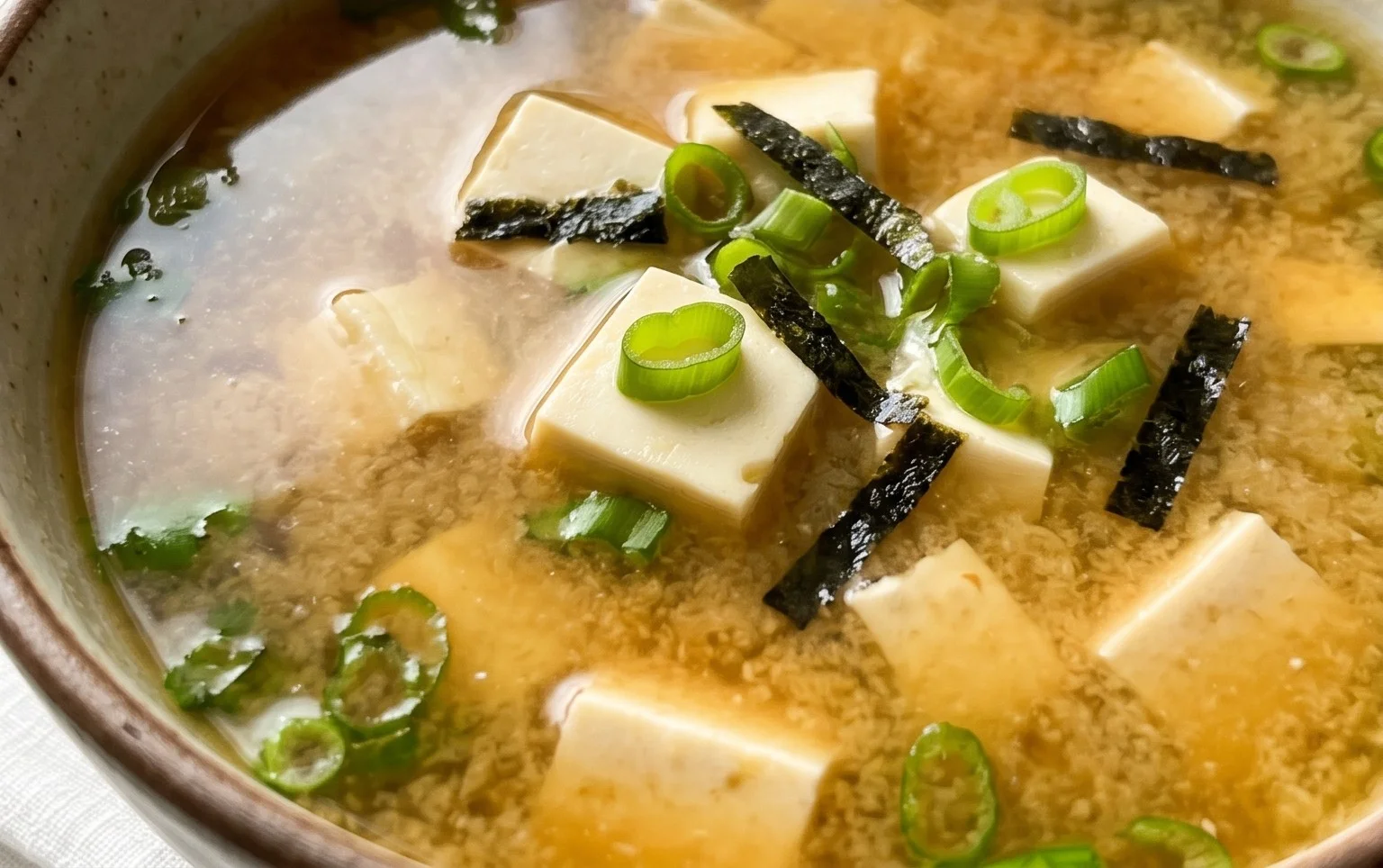
Once the miso paste has been fully dissolved into the separate bowl of broth, pour this mixture back into the saucepan with the rest of the dashi, seaweed, and tofu. Stir gently to combine everything. Heat the soup very gently for another minute or two, just until it is warmed through. Again, we are not aiming for a boil here. The soup should be hot but not bubbling aggressively. Once everything is heated, ladle the miso soup into your serving bowls. Garnish each bowl with the chopped scallions. The fresh, bright flavor and vibrant green of the scallions add a perfect finishing touch to this comforting and classic soup. Enjoy your homemade miso soup immediately!
Conclusion:
And there you have it – a simple, incredibly satisfying Miso Soup recipe that’s perfect for any occasion! This recipe is a winner because it’s remarkably quick to prepare, offering a burst of savory, umami-rich flavor with minimal effort. It’s the ideal starter for a Japanese meal, a comforting midday pick-me-up, or even a light, nourishing supper. I truly encourage you to give this Miso Soup a try; you’ll be amazed at how easy it is to create such a delicious and authentic dish in your own kitchen.
Beyond the classic combination, don’t hesitate to get creative with your Miso Soup! Consider adding silken tofu for extra protein, shiitake mushrooms for an even deeper earthy flavor, or a sprinkle of toasted sesame seeds for added crunch and aroma. You can also experiment with different types of miso paste – white miso (shiro miso) offers a milder, sweeter profile, while red miso (aka miso) provides a more robust, salty kick. For a heartier meal, add some cooked noodles or shredded chicken. The possibilities are endless!
Frequently Asked Questions:
What is miso paste and where can I find it?
Miso paste is a fermented soybean paste that is a staple in Japanese cuisine. It has a unique savory, umami flavor. You can typically find it in the international aisle of most major supermarkets, in Asian grocery stores, or at specialty food shops. It’s usually found in the refrigerated section.
Can I make this Miso Soup recipe ahead of time?
Miso soup is best enjoyed fresh because the delicate flavor of the miso can diminish with prolonged cooking or reheating. However, you can prepare the dashi broth and chop your ingredients in advance. When you’re ready to serve, gently warm the dashi and then whisk in the miso paste just before adding your toppings. Avoid boiling the miso, as this can alter its taste and beneficial properties.
What are the best toppings for Miso Soup?
Classic toppings include thinly sliced scallions (green onions), dried wakame seaweed (which rehydrates in the hot soup), and sometimes small cubes of silken tofu. Feel free to add your personal favorites, such as enoki mushrooms, a swirl of sesame oil, or a pinch of shichimi togarashi (Japanese seven-spice blend) for a little heat.
Miso Soup Recipe
A simple and authentic recipe for classic Japanese miso soup, perfect for a quick and warming meal.
Ingredients
-
2½ cups Dashi
-
1 heaping tablespoon dried seaweed
-
4 oz silken tofu (cut into small pieces)
-
2-2½ tablespoons miso paste (or to taste)
-
1 tablespoon scallion (chopped)
-
1 teaspoon ginger (grated)
Instructions
-
Step 1
In a medium saucepan, bring the dashi to a simmer over medium heat. If using dried seaweed that requires rehydration, do so now according to package directions and add it to the simmering dashi. -
Step 2
Once the dashi is simmering and the seaweed is added, reduce heat to low. Stir in the grated ginger. -
Step 3
In a small bowl, whisk together the miso paste with a ladleful of the warm dashi until smooth. This prevents clumps. -
Step 4
Gently add the silken tofu pieces to the saucepan. -
Step 5
Gradually stir the dissolved miso mixture into the soup. Do not boil the soup after adding the miso, as this can diminish its flavor and nutritional benefits. -
Step 6
Ladle the miso soup into bowls. Garnish with chopped scallions before serving immediately.
Important Information
Nutrition Facts (Per Serving)
It is important to consider this information as approximate and not to use it as definitive health advice.
Allergy Information
Please check ingredients for potential allergens and consult a health professional if in doubt.